Oncology
DA-4701

Unmet needs
DA-4701 addresses a critical unmet need in EGFR-mutant NSCLC by targeting key resistance mutations, including C797S,
while offering improved tolerability compared to existing EGFR inhibitors.
-
A substantial proportion of NSCLC patients harbor EGFR activating mutations, particularly in Asia.
However, the clinical benefit of osimertinib is limited by frequent acquired resistance, including the EGFR C797S mutation. -
EGFR C797S is a key on-target resistance mechanism, yet effective therapies with both strong efficacy and favorable safety remain limited.
Notably, skin toxicity from existing EGFR inhibitors often reduces quality of life and treatment adherence, highlighting the lack of well-tolerated oral options. - Degrader-based approaches eliminate the target protein, enabling broader activity against resistance mutations and potentially reducing both acquired and complex resistance.
MoA (Mechanism of Action)
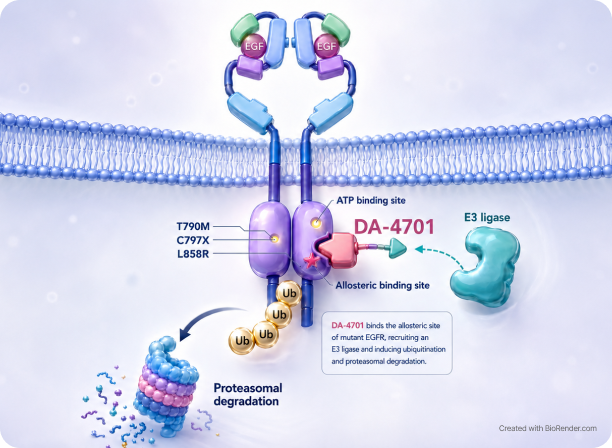
- DA-4701 is a potent and mutant-selective EGFR degrader targeting EGFR L858R/C797S, with minimal activity against wild-type EGFR. Unlike conventional ATP-competitive inhibitors, DA-4701 binds to an allosteric binding site, which is spatially distinct from the ATP binding pocket, enabling effective engagement of resistance-associated EGFR mutants.
- Upon binding to the allosteric site, DA-4701 recruits an E3 ligase to form a ternary complex, leading to ubiquitination of the mutant EGFR protein. This process triggers proteasomal degradation of EGFR, resulting in sustained suppression of EGFR signaling.
- This allosteric degrader mechanism allows DA-4701 to overcome limitations of ATP-competitive inhibitors, providing selective degradation of mutant EGFR while sparing wild-type EGFR, and offers the potential to address both acquired and complex resistance mechanisms.